CoR Australia Newsletter – 24 June 2018

Important News For Managers of Transport and Logistics Companies…
In This Blog Post…

  • Important changes to Heavy Vehicle National Law (HVNL) coming 1 October 2018
  • Informative quotes from NHVR previous CoR Manager Michael Crellin
  • New penalties applying: up to 5 yrs imprisonment and/or $300,000 for individuals – see more below
  • Our CoR Director Steve Asnicar is in the News, and reveals the personal accident that happened to him over 30 years ago that drives his personal passion for working in this field
  • Plus more… read on below…
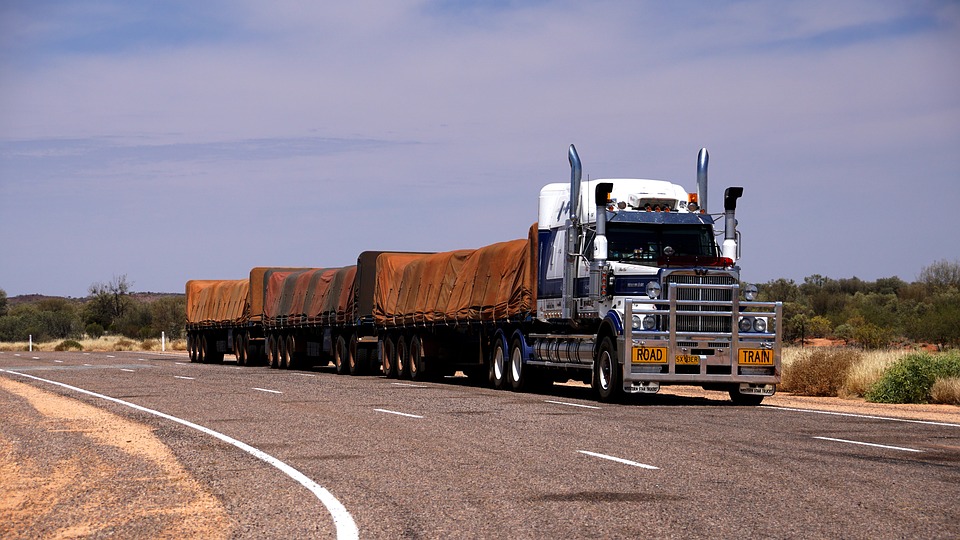
road train Chain of responsibility consulting

2018 is shaping up to be a pivotal year for all company’s involved in the T&L industry with new laws under the NHVL coming into effect on 1 October 2018. 

That’s just 4  months away.

In this issue we include some transcript excerpts from a video produced by the NHVR about the new changes.

But first, our very own Steven Asnicar, Director and lead consultant for Chain of Responsibility Australia has been in the news himself, doing a candid interview with CeMAT Australia prior to his upcoming extended presentation at the CeMAT 2018 Knowledge Theatre, entitled: ‘The changes that will affect every business in Australia: NHVL – Chain of Responsibility law changes in 2018’: 

Read more below >>
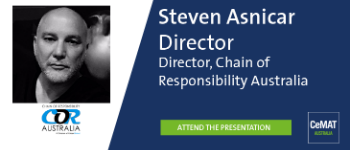
Q.  “How did you come to specialise in Chain of Responsibility (CoR) legislation? Is this a topic you’re particularly passionate about?”

A:  “When I was 18 years of age I was in an accident with a 12-tonne-truck driver who hadn’t slept in three days. I spent 14 days in intensive care and was off work for six months.

As I lay on the road…”  >> read more here

SUBSCRIBE AND DOWNLOAD OUR FREE WHITE PAPER:

NHVR have released a Frequently Asked Questions sheet on CoR for farmers / primary industry.
You can access it here

New Primary Duty laws in 2018

“On 1 October 2018, the Heavy Vehicle National Law (HVNL) will be amended to provide that every party in the heavy vehicle transport supply chain has a duty to ensure the safety of their transport activities.

In practical terms, this primary duty represents an obligation to eliminate or minimise potential harm or loss (risk) by doing all that is reasonably practicable to ensure safety. As a party in the supply chain, the best way to do this is to have safety management systems and controls in place, such as business practices, training, procedures and review processes that:

  • identify, assess, evaluate, and control risk
  • manage compliance with speed, fatigue, mass, dimension, loading and vehicle standards requirements through identified best practice
  • involve regular reporting, including to executive officers
  • document or record actions taken to manage safety.”

Source: https://www.nhvr.gov.au

New Fines.

Excerpt from NHVR Video (click here to see video and full transcript):

“The new penalties. So there’s three categories.

Category 3:  So the first one is a breach of that safety duty.  Now this doesn’t have to be an incident or an event, this can simply be … a failure in the system that hasn’t properly captured that risk. $50,000 for an individual and $500,000 for a corporation.

Category 2 is where that same circumstance exists, but there is a risk of injury or death. $100,000 for the individual, a million dollars for the corporation.

And here’s probably the most significant change to our law, is the Category offence (which) is one where recklessness is involved. That means the individual’s liable to five years imprisonment and/or $300,000, and the corporation, a three million dollar penalty.”

Click here to see video and full transcript

Click the image to the right (or below on mobile) to watch this video by the NHVR, outlining a summary of the amended CoR Law.

IMPORTANTLY note that the NHVR CoR manager, in another video, said this:

“The executive officer will need to know: “what are our risk management processes?” “What are our safety systems?” And critically, “are they working?”

It’s a focus upon the business practises and the systems controls that are in place. That means that my investigators won’t need to have a substantive offence.

There won’t need to be an incident or an event that suggests we should commence a COR investigation. We can simply go and have a look at the system and do one of two things. Assure ourselves that the system is functional and effective or detect that it’s not.  (Source: https://www.nhvr.gov.au)”

What can you do in response to this?  See below:

How CoR Australia Can Assist Your Company? 

CoR Australia is one of Australia’s leading national Training, Compliance and Audit Preparation groups delivering customised CoR compliance systems to Australia’s largest through to smallest firms through our suite of integrated services:

Our clients include Coca Cola, Target, Coles, Transport for NSW (Sydney Trains), IKEA, Inghams, Toll, to name just a few.

The solutions CoR Australia provide to best assist your company depend largely on where your company is at with regard to the Chain of Responsibility legislation currently.

Important questions to consider:

  1. Do you have a CoR Management Plan?
  2. Do you have a Safety Management System (SMS) and the rigorous tools and documentation to support it? (See NHVR press release about SMS’s)
  3. What are the “pain points” you may be experiencing currently?
  4. What audits have you had or not had?
  5. What is your current internal capability is to objectively assess your compliance, and develop strategies and tactics to improve safety, workplace systems and procedures, and compliance?

Below is a matrix of training options CoR Australia provides:

All Staff Introduction to Chain of Responsibility  (Non-Accredited)
Key Corporate Staff Basic Chain of Responsibility
(Non-Accredited)
Basic Fatigue
(Non-Accredited)
Basic Loading Unloading
(Non-Accredited)
Dangerous Goods Level 1

(Non-Accredited)

Level 1

Frontline Staff

Apply chain of responsibility legislation, regulations and workplace procedures

Click through to course

(TLIF0001)

Apply Fatigue Management strategies

Click through to course

(TLIF2010)

Load and unload goods/cargo

Click through to course

(TLID2004)

Dangerous Goods Level 2

(Non-Accredited)

Level 2

Supervisors & Managers

Administer chain of responsibility policies and procedures

Click through to course

(TLIF0002)

Administer the implementation of Fatigue Management strategies

Click through to course

(TLIF3063)

Level 3

Managers & Directors

Develop and implement policies and procedures to ensure chain of responsibility compliance

Click through to course

(TLIF0003)

Manage Fatigue Management policy and procedures

Click through to course

(TLIF4064)

Level 4 Executive COR Executive Briefing (Non-Accredited)

For more information about our CoR Compliance Consulting and Training Services visit our website, or contact:

Steven Asnicar on 07 3118 6113, e: [email protected]
or Peter Cutforth on 0731186115, e:  [email protected]

Learn about our compliance services here

CoR Australia
www.coraustralia.com

Do your staff need training?

We can help you. Please check our courses.

View courses